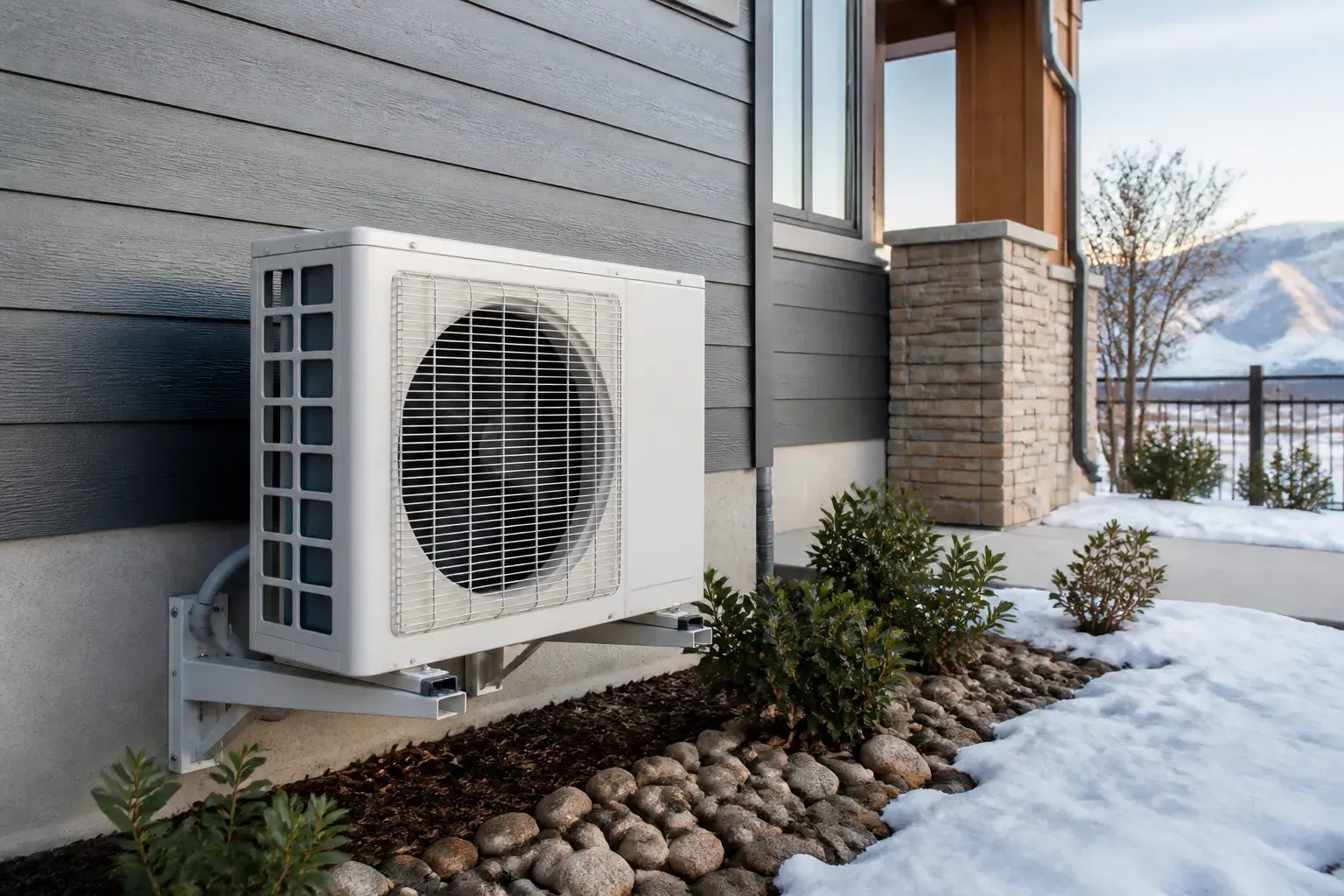
Heat Pumps in Salt Lake City, UT
Heat pump issues can affect comfort in both heating and cooling seasons.
If your heat pump is running but the house still feels off, that usually shows up in a few familiar ways. The air may feel lukewarm, the system may run longer than it used to, or you may hear a new rattling, humming, or clicking sound when it starts up. Some homeowners notice uneven rooms, a thermostat that seems to lag behind, or a unit that keeps switching modes without settling in. Those are the kinds of problems that deserve a careful look before they turn into bigger repairs.
Northline Heating & Air helps homeowners in Salt Lake City with heat pump repair, replacement, and maintenance so the system matches the home instead of fighting it. We focus on straight answers and tidy work. If your heat pump is no longer keeping up, we will check what is actually happening, explain what needs attention, and give you a clear next step so you are not left guessing.
Warning signs
A heat pump usually gives a few clues before it stops performing the way it should. Some problems are small and some point to a failing part, but the symptom is often the same: the home does not feel as comfortable as it used to.
- Weak airflow: The system may be on, but only a small amount of air comes through the vents. That can point to a blower issue, blocked airflow, or a problem inside the indoor unit.
- Uneven temperatures: One room may feel comfortable while another stays too warm or too cool. This often means the system is not moving heat evenly through the home.
- Long run times: If the heat pump keeps running without reaching the set temperature, it may be struggling with capacity, refrigerant flow, or a control issue.
- Short cycling: A unit that turns on and off repeatedly can wear itself down and leave the home with inconsistent comfort.
- Odd sounds: Grinding, buzzing, clicking, or a loud fan noise can signal a loose part, a motor issue, or trouble at the outdoor unit.
- Ice or moisture concerns: Frost that does not clear, or water where it should not be, is worth checking quickly because it can affect performance and damage parts of the system.
If your system is showing more than one of these signs, it is smart to have it looked at before the issue spreads.
Common causes
Heat pumps work year-round, so wear can show up in more than one place. The problem is not always obvious from the outside, which is why careful diagnosis matters.
Airflow restrictions
Dirty filters, blocked returns, or a weak blower can limit the amount of conditioned air moving through the home. When airflow drops, comfort drops too.Refrigerant issues
If the system is low on refrigerant or has a leak, it may struggle to transfer heat properly. That can show up as poor heating, poor cooling, or a unit that runs nonstop.Control problems
A faulty thermostat, sensor, or control board can tell the system to do the wrong thing at the wrong time. That can lead to short cycling or inconsistent temperatures.Outdoor unit wear
Because the outdoor unit handles a lot of the work, the fan, coil, or compressor can wear out over time. When that happens, the whole system can lose efficiency and output.Mechanical strain
Loose parts, worn motors, and aging components can create noise, reduce performance, and eventually lead to a breakdown if they are not addressed.
In Salt Lake City, we often find that the real issue is not one single symptom but a chain of small problems that started with one part slipping out of spec.
Repair approach
When Northline Heating & Air comes out for heat pump repair, we look for the cause first, not just the symptom. That keeps the fix focused and helps avoid repeat trouble.
What we check
- System operation: We verify whether the unit is heating, cooling, or switching between modes the way it should.
- Air movement: We look at airflow through the indoor and outdoor sections so the system is not forced to work against a restriction.
- Control response: We check the thermostat and related controls to make sure the system is getting accurate commands.
- Visible wear: We inspect accessible parts for looseness, damage, buildup, or signs that a component is nearing failure.
- Performance clues: We listen for unusual operation and check whether the system is producing the output the home needs.
What you get
- Clear findings: We explain what is wrong in plain language.
- Practical options: We outline the repair path and whether the issue is minor, moderate, or a sign of larger wear.
- Tidier work: We leave the area clean and respect the home while the work is being done.
The goal is to restore useful comfort without turning the visit into a guessing game.
Replacement when needed
Sometimes repair is the right answer, and sometimes the better move is to replace the system. That decision depends on how the unit is performing, how often it has been needing attention, and whether the existing equipment still fits the home.
A replacement may make sense when:
- Repairs keep repeating: The same problem comes back after being fixed.
- Performance stays weak: The system runs, but comfort never quite returns.
- Parts are wearing out together: One failing part can expose other aging components that are not far behind.
- The home has changed: Additions, remodels, or other changes can create a mismatch between the equipment and the space it serves.
When we replace a heat pump, we help you understand the practical side of the decision so you can move forward with confidence. The new system should fit the home, handle the demand, and make daily comfort more predictable.
Maintenance that helps
Heat pumps work hard because they handle both heating and cooling. Regular upkeep keeps small issues from building into expensive ones and helps the system stay steady through changing seasons.
A good maintenance visit can help with:
- Cleaner airflow: Dust and buildup are less likely to choke performance.
- Smoother operation: Moving parts can be checked before wear turns into failure.
- Better temperature control: The system is more likely to respond the way it should.
- Earlier problem detection: Small issues are easier to correct when they are found early.
If your system has been making more noise, running longer, or losing comfort, maintenance can be a smart first step before a larger repair is needed. Northline Heating & Air uses maintenance visits to catch the kinds of issues homeowners usually notice only after comfort starts slipping.
What visits feel like
Homeowners usually want to know what the appointment will actually look like. We keep it simple and direct.
We listen first.
You tell us what changed, when it started, and what the system is doing now.We inspect the system.
We check the heat pump, the indoor equipment, and the visible parts involved in operation.We explain the issue.
You get a clear explanation of what is happening and what that means for your home.We do the work.
If you approve the repair or replacement path, we move ahead and keep the work area orderly.We verify operation.
Before we wrap up, we make sure the system is working as expected and that you understand the result.
That process is meant to reduce confusion. You should know what went wrong, what was done, and what to watch next.
Local comfort help
Heat pumps are a good fit for many homes because they can handle both heating and cooling in one system. But when they fall behind, the difference is obvious fast. If the air feels inconsistent, the system sounds different, or it is running more than it should, the fix starts with a careful diagnosis and a straightforward plan.
Northline Heating & Air helps homeowners in Salt Lake City with heat pump repair, replacement, and maintenance across the Salt Lake Valley. We also work in nearby communities including Sandy, West Jordan, Murray, Draper, and Holladay. Whether the concern is a noisy outdoor unit, weak airflow, or a system that just does not feel right anymore, we focus on practical answers and tidy work.
Common questions
Why is my heat pump blowing cool air in heating mode?
It may be a control issue, airflow problem, refrigerant issue, or a problem with the reversing process. The system needs to be checked to find out which one is causing the symptom.
Why does my heat pump run so long?
Long run times can happen when the system is struggling to reach the set temperature, moving air poorly, or dealing with a component that is not working as efficiently as it should.
What does short cycling mean?
Short cycling means the unit keeps turning on and off in brief bursts instead of running through a steady cycle. That can point to control trouble, airflow restrictions, or another issue that needs attention.
Can one bad part affect the whole system?
Yes. A problem in one area can throw off performance in another, especially when the system is already under strain. That is why a full check matters.
How do I know if repair or replacement makes more sense?
If the system has repeated problems, still struggles after repairs, or no longer fits the home well, replacement may be the more practical choice. A careful evaluation will make that clearer.
What should I do if my heat pump sounds different than usual?
Turn the system off if the noise is severe, then have it checked soon. New sounds often mean a part has loosened, worn, or started failing.
How We Work
A Simple HVAC Process
Every job starts with a careful look at the equipment and a clear explanation of what comes next.
- 01
Check the System
We look at the equipment, symptoms, and likely cause before suggesting any work.
- 02
Explain Your Options
You get a straightforward explanation of what we found and the choices ahead.
- 03
Complete the Work
We finish the job carefully and leave the area clean.
FAQ
Common HVAC Questions
If you have questions about your heating or cooling system, send us a message and we will help you sort through the options.
How do I know if my furnace needs repair or replacement?
An inspection is the best place to start. We look at the condition of the equipment and explain which option makes the most sense.
Why is my AC running but not cooling well?
Low airflow, refrigerant issues, or a failing part can all cause that problem. A service visit helps identify the cause.
Can a heat pump handle both heating and cooling?
Yes, that is what it is designed to do. We can help with repair, replacement, and maintenance for heat pumps.
Is a maintenance plan worth it?
Regular maintenance can help catch small issues early and keep equipment running more smoothly.
What can improve indoor air quality at home?
Filtration, equipment upkeep, and the right system changes can all help reduce dust and stale air.
Get started
Make Home Comfort Easier
Tell us what your system is doing, and we will help you choose the right next step for repair, replacement, maintenance, or air quality.
Call Today:(801) 555-0132